
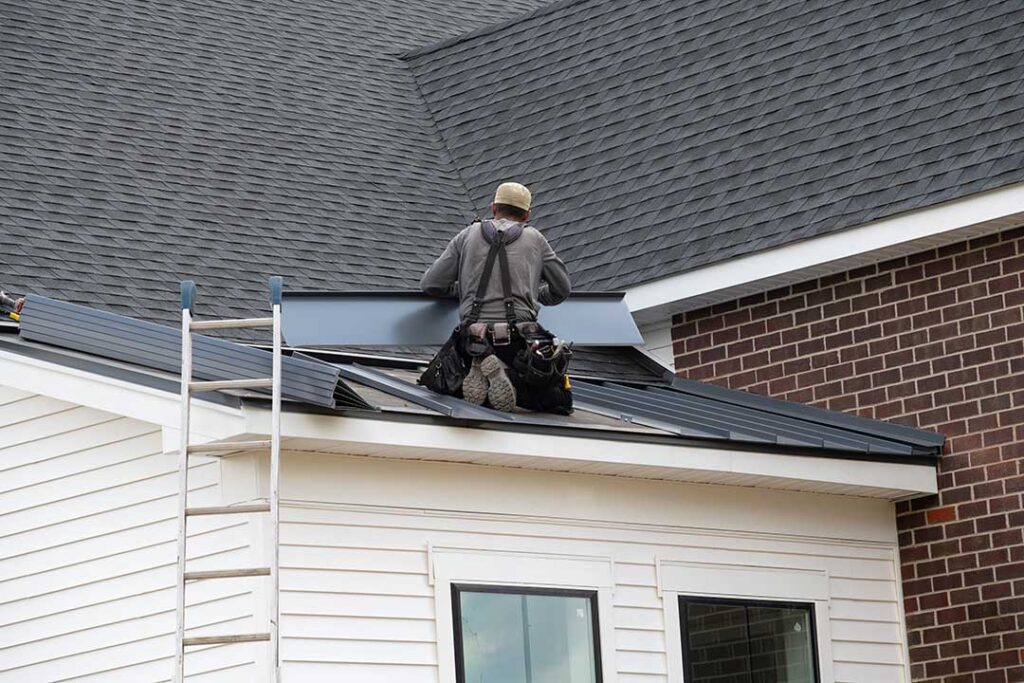
Hail damage is not always obvious from the ground. Small ice stones can bruise roofing materials, loosen protective granules, crack exterior components, or damage flashing without creating an immediate leak. In Angola, NY, where spring and summer thunderstorms can bring sudden bursts of wind and precipitation, checking a roof after a severe storm can help identify problems before they worsen.
What does hail damage look like on asphalt shingles?
Hail damage on asphalt shingles often appears as small, irregular depressions where the impact has crushed the shingle’s surface. These spots may look dark, shiny, soft, or slightly raised around the edges.
A damaged area can include:
- Missing granules, leaving a lighter or darker exposed patch
- A circular or uneven bruise beneath the shingle surface
- Cracks or splits in the fiberglass mat
- Exposed asphalt or matting
- Shingles that are chipped along their edges
- Loosened tabs or pieces that no longer lie flat
The most important sign is not always a visible hole. A shingle may remain intact on the surface while the underlying reinforcement has been weakened. Pressing on suspected damage may reveal a soft spot, but walking on a roof can be dangerous and may cause additional damage. Ground-level inspection with binoculars is safer.
How can someone check a roof from the ground?
A ground-level inspection can identify many warning signs without climbing onto the roof. Look at the roof from several angles, especially after the sun has moved across the sky. Hail bruises and missing granules may be easier to see when light reflects across the surface.
Check for:
- Uneven dark marks on otherwise consistent shingles
- Bare-looking patches
- Shingle pieces in gutters or near downspouts
- Exposed nail heads or lifted shingle edges
- Fresh debris in the yard
- Damaged screens, siding, window trim, or outdoor equipment
A pair of binoculars can help reveal chipped edges and missing granules. Comparing the roof’s appearance with older photographs may also help distinguish recent storm damage from long-term aging.
Why should gutters and downspouts be inspected?
Hail often removes roofing granules, which can wash into gutters and downspouts during the next rainfall. A small amount of granule loss is normal as shingles age, but a sudden concentration of coarse, sand-like material after a storm may indicate impact damage.
Inspect the inside of gutters for:
- Unusual piles of dark or colored granules
- Shingle fragments
- Small pieces of underlayment or flashing
- Dents or punctures in metal gutter sections
Granules alone do not prove that hail caused damage. Older roofs naturally shed surface material, and gutter debris may also come from normal weathering. The timing, amount, and location of the debris matter.
What other roof components can hail damage?
Hail does not affect only shingles. Metal and plastic components may show impact marks even when the main roof covering appears undamaged.
Inspect visible areas of:
- Metal flashing around chimneys, vents, and roof edges
- Ridge caps and exposed vent covers
- Skylight frames or plastic domes
- Drip edges
- Metal gutters and downspouts
- Siding, window trim, and exterior air-conditioner covers
- Vents, roof pipes, and other rooftop penetrations
Dents in metal are easier to recognize than bruising in shingles. However, a dent is not automatically a functional problem. The key questions are whether the component is cracked, punctured, displaced, or no longer directing water properly.
Can hail damage cause a roof leak immediately?
Sometimes, but not always. A large hailstone can puncture a roof covering or damage flashing during the storm. Smaller impacts may weaken materials without allowing water through right away.
Leaks can appear later when:
- Wind lifts a weakened shingle
- Repeated freezing and thawing expands a crack
- Rain reaches damaged flashing
- Snow and ice place additional stress on the roof
- Water travels beneath a shingle and enters around a nail or seam
After a storm, inspect ceilings, attic areas, and upper wall surfaces for new discoloration, damp insulation, musty odors, or dripping water. Water stains may appear some distance from the actual roof entry point because moisture can travel along framing.
If water is actively entering the building, place a container beneath the drip, move valuables away from the area, and avoid electrical fixtures that may be wet. Do not climb onto a wet or damaged roof.
How is hail damage different from normal roof aging?
Normal aging usually affects broad areas gradually. Shingles may become brittle, lose color evenly, curl at the edges, or shed granules over many seasons. Hail damage is more likely to appear as concentrated, irregular impact marks following a particular storm.
Common differences include:
- Hail damage: scattered bruises, sharp chips, localized granule loss, or fresh debris
- Aging: widespread fading, generalized brittleness, curling, or gradual surface wear
- Wind damage: lifted, creased, folded, or missing shingles
- Animal damage: concentrated holes, torn areas, or tracks near likely access points
- Installation problems: repeating defects in straight lines or consistent patterns
A roof can have more than one type of damage. A storm may expose pre-existing wear, and an older roof may be more vulnerable to impact than a newer one.
Should you inspect the attic after a hailstorm?
An attic inspection can reveal problems that are not visible from outside. Use a flashlight and look from a safe location without stepping between structural supports.
Look for:
- Damp or compressed insulation
- Water stains on rafters or roof decking
- Daylight visible through the roof
- Rust around nails or metal fasteners
- Darkened wood or signs of repeated moisture
- Damaged ventilation components
Not every attic stain means the latest storm caused it. Older marks may be dry and discolored, while recent moisture may feel damp or show a sharper edge. Moisture can also result from condensation, plumbing, or ventilation problems rather than roof damage.
When is a closer inspection necessary?
A closer inspection may be necessary when there are visible punctures, active leaks, loose materials, structural concerns, or uncertainty about whether the roof is safe. Roof surfaces become particularly hazardous after hail because they may be wet, slippery, and covered with hidden damage.
Safety concerns are especially serious when:
- Shingles or metal panels are missing
- A tree limb has struck the roof
- The roof deck appears sagging
- Water is entering near electrical wiring
- A skylight or roof opening is cracked
- Debris is unstable or blocking a walkway
Use photographs from the ground to document the roof, gutters, exterior walls, and surrounding property. Record the approximate storm date and note when any leak or interior staining first appeared. This information can help distinguish recent storm effects from older maintenance issues.
What should residents remember after a hailstorm?
Hail damage is easiest to identify by looking for a pattern: fresh impact marks on the roof, matching dents on exposed metal, granules in gutters, and new moisture problems inside the building. No single sign proves the cause by itself.
A careful ground inspection after severe weather, followed by prompt attention to active leaks or unsafe conditions, is usually more useful than immediately assuming every dark spot is storm damage. Roof age, previous repairs, material type, wind exposure, and the intensity of the storm all affect what the damage looks like.
In a lakeside community with changing weather and winter freeze-thaw cycles, small defects can become larger over time. Finding and documenting them early can help prevent avoidable interior damage and clarify whether a problem is related to hail, wind, aging, or another source.
